


End-of-Month Health Check: Why Taking 60 Seconds Can Improve Your Entire Routine
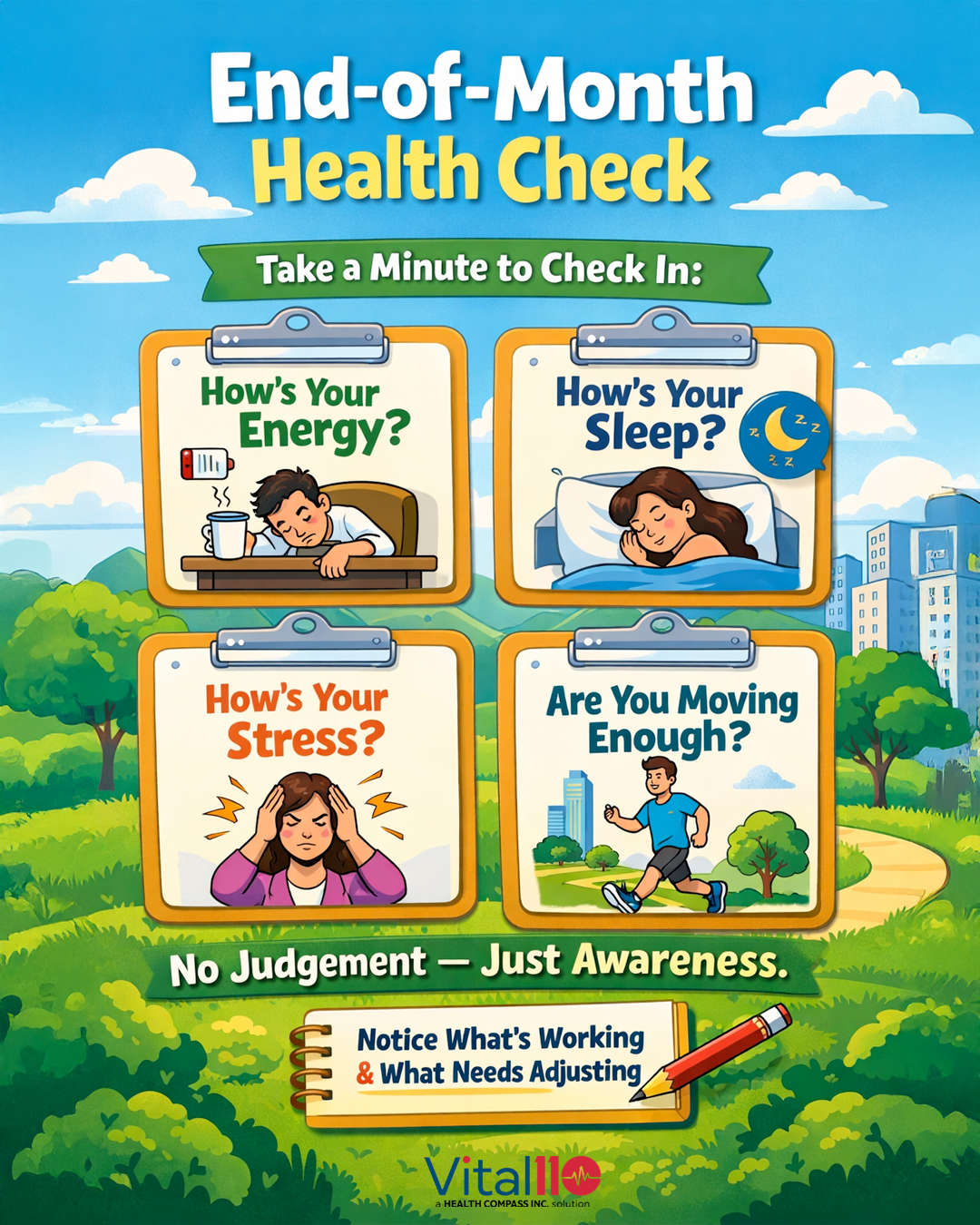
As the month comes to a close, most people are focused on what they didn’t get done — missed workouts, inconsistent routines, or goals that didn’t stick. But real progress doesn’t come from perfection. It comes from awareness.
An end-of-month health check isn’t about judging yourself. It’s about taking a moment to pause, reflect, and understand where you are — so you can make smarter, simpler adjustments moving forward.
At Vital 110, we believe that better health starts with better awareness. And sometimes, all it takes is 60 seconds to reset your direction.
Why an End-of-Month Check-In Matters
Life moves fast. Between work, family, and everyday responsibilities, it’s easy to run on autopilot. Weeks go by without checking in on how you’re actually feeling — physically or mentally.
The problem is, small issues don’t stay small forever. Low energy, poor sleep, and rising stress can slowly build into burnout if left unchecked.
That’s where a simple check-in comes in. It gives you a chance to notice patterns early, make small adjustments, and stay ahead of bigger problems.
Think of it like routine maintenance. You don’t wait for something to break — you check in regularly to keep everything running smoothly.
The 4 Areas to Check Every Month
You don’t need a complicated system. Just focus on four key areas that impact your overall health and daily performance.
1. Energy
Your energy level is one of the clearest indicators of your overall health.
Ask yourself:
- Do I feel consistently tired throughout the day?
- Am I relying on caffeine to get through basic tasks?
- Do I wake up feeling rested or already drained?
Low energy can be caused by poor sleep, dehydration, stress, or lack of movement. It’s not something to ignore — it’s a signal.
Instead of pushing through it, look at what might be causing it. Even small changes — like better hydration or more consistent sleep — can have a big impact.
2. Sleep
Sleep is the foundation of everything — energy, mood, focus, and physical recovery.
Check in with your sleep habits:
- Am I getting enough hours each night?
- Is my sleep consistent, or all over the place?
- Do I feel rested when I wake up?
Many people underestimate how much poor sleep affects their daily life. It impacts productivity, decision-making, and even emotional control.
Improving sleep doesn’t require a full overhaul. Start with consistency — going to bed and waking up at the same time — and reducing screen time before bed.
3. Stress
Stress doesn’t always show up loudly. Sometimes it builds quietly — through tension, irritability, or mental fatigue.
Ask yourself:
- Do I feel constantly overwhelmed?
- Am I having trouble focusing?
- Do I feel “on edge” more often than usual?
Unchecked stress can affect both mental and physical health. It can lead to sleep issues, low energy, and even long-term health concerns.
Recognizing stress early gives you the chance to manage it — through movement, breaks, or simply stepping back for a few minutes during the day.
4. Movement
Movement is one of the simplest and most effective ways to improve overall health — yet it’s often the first habit people lose when life gets busy.
Check in honestly:
- Am I moving regularly throughout the week?
- Am I sitting for long periods without breaks?
- Do I feel physically stiff or sluggish?
You don’t need a perfect workout plan. Even daily walks, short stretches, or light activity can improve circulation, energy, and mood.
The goal isn’t intensity — it’s consistency.
Awareness Over Perfection
The most important part of this check-in is how you approach it.
This is not about being perfect. It’s not about criticizing yourself or trying to fix everything at once.
It’s about awareness.
When you understand what’s working and what isn’t, you can make better decisions moving forward. Without awareness, it’s easy to stay stuck in the same patterns.
Progress doesn’t come from dramatic resets. It comes from small, consistent adjustments over time.
How to Turn Awareness into Action
Once you’ve checked in, don’t overwhelm yourself by trying to change everything at once. Focus on one small adjustment.
For example:
- If your sleep is off → go to bed 20 minutes earlier.
- If your energy is low → drink more water during the day.
- If your stress is high → take short breaks or step outside.
- If movement is lacking → add a 10-minute walk to your routine.
That’s it. One change.
Small actions are easier to stick with — and they build momentum over time.
Why Preventive Care Starts Here
Preventive care isn’t just about doctor visits or screenings. It starts with paying attention to your body and your habits.
When you regularly check in on your energy, sleep, stress, and movement, you catch issues before they grow into bigger problems.
This is how you stay ahead of your health — not reacting when something goes wrong, but adjusting early and often.
It’s simple, practical, and effective.
Final Thoughts: One Minute That Matters
You don’t need hours to improve your health. Sometimes, you just need one minute of honesty.
At the end of each month, pause and ask yourself a few simple questions. Not to judge — but to understand.
Because when you’re aware, you can adjust. And when you adjust, you improve.
One small change today can shape how you feel next month.
Vital 110 is a Health Compass Inc. solution, designed to simplify healthcare and empower individuals to live healthier, more balanced lives.
‹ Back
Recent Posts
-

Seasonal Mood Shifts: Recognizing and Managing the Early Signs of Fall Blues
September 30, 2026
-

Flu Shot Facts: What to Know Before This Year's Season
September 28, 2026
-

The Fall Reset: Easing Back Into Healthy Routines After Summer
September 21, 2026
-

Your Fall Preventive Care Checklist: Screenings and Checkups Not to Skip
September 14, 2026
-

Building a Stronger Immune System Before Cold and Flu Season
September 7, 2026