


Your First Mammogram: What to Expect, How to Prepare, and Why It Matters
If your first mammogram is on the calendar, or you know it probably should be, it is completely normal to feel a little nervous. Many people put off that first appointment simply because they are not sure what will happen. The good news is that a screening mammogram is quick, routine, and far less mysterious once you know what to expect.
October is Breast Cancer Awareness Month, which makes this a natural time to take that step. This guide focuses on the practical side of a first mammogram: when to start, how to prepare, what happens during the visit, and what your results may mean, so you can walk in feeling calm and prepared.
Why Mammograms Matter
A mammogram is a low-dose X-ray of the breast. Screening mammograms are designed to find changes in breast tissue before you can feel them or notice any symptoms. Finding breast cancer early, when it is often smaller and easier to treat, is the main reason screening is recommended. Most of the time, a mammogram simply confirms that everything looks as expected, and that peace of mind has real value too.
Your first mammogram also creates a baseline. Future images can be compared with this one, which helps the radiologist spot changes over time.
When Should You Get Your First Mammogram?
The U.S. Preventive Services Task Force (USPSTF) updated its guidance in 2024 and now recommends screening mammograms every 2 years for women at average risk, ages 40 to 74. Some organizations, such as the American Cancer Society, support the option of yearly screening. Both approaches are reasonable, and the right schedule for you is a conversation worth having with your provider.
When your personal risk may change the plan
Your provider may suggest starting earlier, screening more often, or adding other types of imaging if you have factors that raise your risk, such as:
- A strong family history of breast or ovarian cancer
- A known genetic mutation, such as BRCA1 or BRCA2
- Dense breast tissue
- Radiation therapy to the chest earlier in life
If any of these apply to you, or if you are unsure about your family history, bring it up at your next visit.
How to Prepare for Your Appointment
A little preparation can make your mammogram more comfortable and help produce the clearest possible images.
Choosing the right day
If you still have periods, your breasts may be more tender in the days before and during your period. Scheduling your mammogram about a week after your period can mean less tenderness during the exam.
The day of your mammogram
- Skip deodorant, antiperspirant, powder, and lotion on your chest and underarms. These products can show up as white spots on the images. You can bring your deodorant along to put on afterward.
- Wear a two-piece outfit. You will undress from the waist up, so a top with pants or a skirt means you only need to remove your top.
- Bring prior images or arrange a transfer. If you have had any breast imaging before, even at another facility, ask to have those images sent over for comparison.
What to tell the technologist
The technologist who takes your images is there to help you, so speak up. Let them know if you:
- Have breast implants, since special positioning and extra views are usually needed
- Have noticed any symptoms or changes in your breasts
- Might be pregnant or are breastfeeding
Check your coverage
Most health plans cover screening mammograms as preventive care. Coverage for diagnostic mammograms and follow-up imaging can be different, so check your plan's details ahead of time to avoid surprises.
What Happens During the Visit
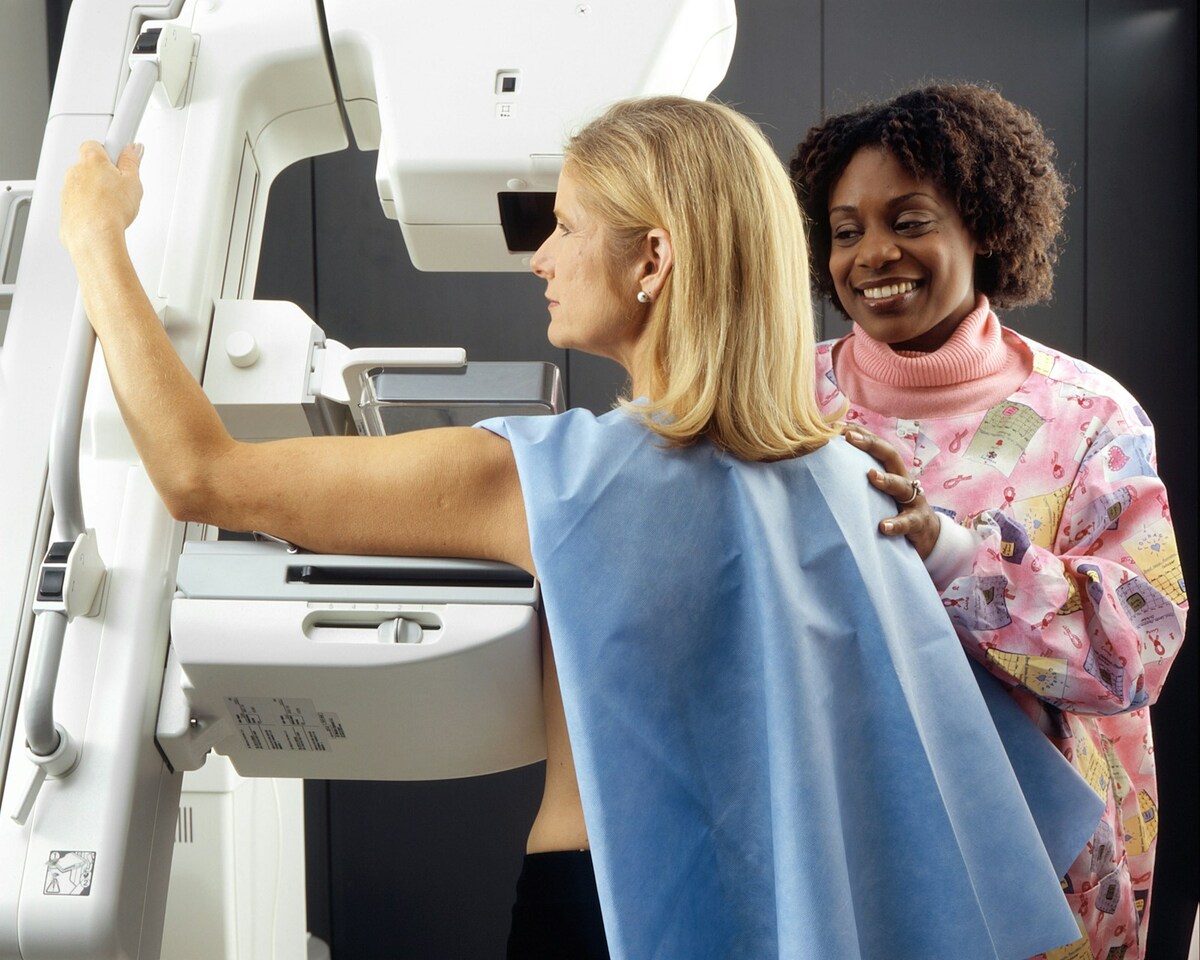
After you check in, you will change into a gown in a private area. The technologist will position one breast at a time on a flat platform, and a clear plastic plate will press down gently but firmly to spread the tissue out. This compression is what allows the X-ray to capture a clear picture.
Compression lasts only a few seconds for each image, and you will usually have two views of each breast, one from above and one from the side. Many people describe the feeling as pressure or brief discomfort rather than pain. If it does hurt, say so, because the technologist can often adjust your position. The whole appointment is often finished in under 30 minutes.
You may also be offered 3D mammography, also called tomosynthesis, which is widely available. It takes multiple images from different angles to create a layered view of the breast, and the experience feels much the same as a standard mammogram. If you have questions about which option makes sense for you, or you are not sure where to begin, reach out to the Vital 110 team and we can help point you in the right direction.
Screening vs. Diagnostic Mammograms
It helps to know that there are two main types of mammograms. A screening mammogram is the routine test for people who have no symptoms. A diagnostic mammogram is a more detailed exam used when you have a symptom, such as a lump, or when something on a screening image needs a closer look. Diagnostic exams may include extra views, magnified images, or an ultrasound.
If you get a callback
Getting a call to come back for more images can feel scary, but callbacks are common, especially after a first mammogram, when there are no earlier images to compare. Most callbacks do not mean cancer. Often, the extra images simply show overlapping tissue or something that turns out to be harmless. If you are called back, try to schedule the follow-up promptly so you can get answers sooner.
Understanding Breast Density
Breasts are made of fatty tissue and dense tissue (the fibrous and glandular parts). Having dense breasts is common and normal, but dense tissue can make mammogram images harder to read, because both dense tissue and some abnormal areas can appear white on the image.
Under a federal FDA rule that took effect in September 2024, mammography facilities are required to tell patients whether they have dense breast tissue. If your results letter says your breasts are dense, it is not a cause for alarm. It is a prompt to ask your provider about next steps, such as:
- Does my breast density, combined with my other risk factors, change my screening plan?
- Would additional imaging, such as an ultrasound or MRI, be helpful for me?
- How often should I be screened going forward?
When to See a Provider Between Screenings
Symptoms can show up at any time, including between scheduled mammograms, and you do not need to wait for your next appointment to have them checked. Getting familiar with how your breasts normally look and feel makes it easier to notice when something is different. Contact your healthcare provider if you notice:
- A new lump or thickening in the breast or underarm
- Skin dimpling or puckering
- Nipple changes, such as turning inward, or nipple discharge
- Persistent pain in one spot that does not go away
- Swelling in all or part of a breast
Many breast changes turn out to be something other than cancer, but they are always worth checking, even if a recent mammogram was normal.
The Bottom Line
Your first mammogram is a quick, routine step that can make a real difference in your long-term health. Talk with your provider about when to start and how often to screen based on your personal risk, prepare by skipping deodorant and wearing a two-piece outfit, and remember that compression lasts only seconds. If you get a callback, try not to panic, since most do not mean cancer. Between screenings, pay attention to your body and report any changes. Taking this step during Breast Cancer Awareness Month is a meaningful way to care for yourself.
Have questions about your health or want to talk with a provider? Contact the Vital 110 team to get started. Vital 110 is a healthcare initiative from Health Compass Inc., dedicated to making everyday health more accessible.
‹ Back
Recent Posts
-
-

Seasonal Mood Shifts: Recognizing and Managing the Early Signs of Fall Blues
September 30, 2026
-
Flu Shot Facts: What to Know Before This Year's Season
September 28, 2026
-

The Fall Reset: Easing Back Into Healthy Routines After Summer
September 21, 2026
-

Your Fall Preventive Care Checklist: Screenings and Checkups Not to Skip
September 14, 2026